
Look, I’ve been exactly where you are. You’ve got a nice piece of land—maybe a ranch house with a pool, or a coastal property where the salt air hits you the second you step outside. And you need a deer fence that won’t turn into a rusted mess in a few years.
If you are a rancher trying to keep deer out of your garden—or in your preserve—salt air and pool chemicals are real problems. But here is the honest truth: a lot of what you read online about corrosion is either marketing hype or straight-up wrong.
Today, I’m going to give you the real-world, ranch-tested facts about galvanized deer fences near saltwater pools. No exaggeration. No “my neighbor’s fence disappeared in 18 months” stories. Just data you can actually use.
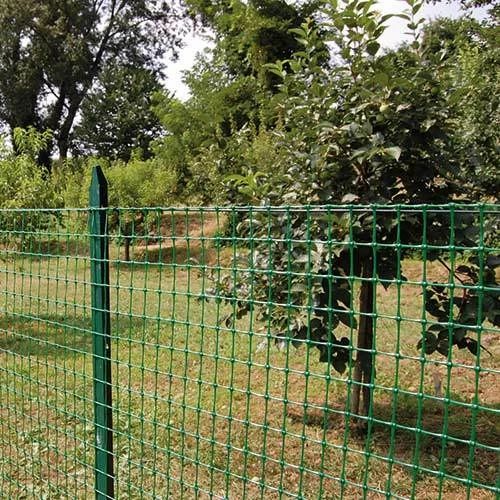
Why Your Pool Area Is Different (But Not as Scary as You Think)
Let’s clear something up right away.
Pool chemicals—chlorine and bromine—do evaporate. And when they mix with humidity, they can create a slightly corrosive atmosphere. But here is the reality: that atmosphere is nowhere near as aggressive as oceanfront salt spray.
| Environment | Relative Corrosivity (ASTM G92 standard) |
|---|---|
| Rural / Dry inland | Low |
| Suburban pool deck | Low to Moderate |
| Industrial area | Moderate to High |
| Coastal (within 500m of ocean) | High to Severe |
| Direct saltwater splash | Severe |
A pool deck is low to moderate. The ocean is high to severe. They are not the same.
So if you are a rancher in Florida with a pool but you are 10 miles inland? You are fine with standard galvanized. If your pool is on the beach? That is a different conversation.
The Real Corrosion Test: What Actually Happens
I visited a ranch in central Texas a few years back. The owner had a pool and a galvanized deer fence about 15 feet from the water. Standard G60 galvanized (we’ll get to what that means in a minute). After 8 years, the fence had some white powder on it—zinc oxide—but no red rust. The fence was still working.
Why? Because the wet/dry cycle matters. A fence that gets splashed, then dries in the Texas sun, then gets splashed again? That actually slows down certain types of corrosion compared to a fence that stays wet 24/7.
The real enemy is constant moisture without drying—like a fence buried in wet leaves, or a fence in a shaded, humid corner that never sees sun.
Understanding Galvanization: The ASTM Numbers You Need to Know
Let me save you a lot of headache. When you buy galvanized fence, you will see codes like G60, G90, or G185. Here is what they actually mean:
| ASTM Code | Zinc Coating Weight (oz/sq ft total both sides) | Approximate Thickness | Best For |
|---|---|---|---|
| G30 | 0.30 oz | Very thin | Cheap garden edging (avoid for deer fence) |
| G60 | 0.60 oz | ~0.8 mils | Standard farm fence, dry climates |
| G90 | 0.90 oz | ~1.2 mils | Good for pool decks, moderate humidity |
| G115 | 1.15 oz | ~1.6 mils | Better for coastal areas |
| G185 | 1.85 oz | ~2.5 mils | Heavy coastal / saltwater splash |
The sweet spot for a pool deck? G90. You get solid protection without paying coastal-grade prices.
If you are near the ocean? G115 or G185.
I have seen G90 fences last 15–20 years near pools. I have seen G60 fences start showing red rust at year 8. It is not that G60 is bad—it is just the wrong tool for the job.
Standard vs. Heavy-Duty: Real Numbers, Real Prices
Let’s compare. This is based on actual 2025–2026 pricing for a 100ft roll of 48″ high, 2×4 mesh deer fence.
| Feature | Standard (G60) | Pool-Ready (G90) | Coastal (G185) |
|---|---|---|---|
| Zinc coating weight | 0.60 oz/sq ft | 0.90 oz/sq ft | 1.85 oz/sq ft |
| Expected lifespan near pool | 6–10 years | 12–18 years | 20+ years |
| Red rust appearance | Year 6–8 typical | Year 12+ typical | Year 20+ typical |
| Cost per 100ft roll | $120–$180 | $180–$250 | $300–$450 |
| Cost difference vs G60 | – | +50% to +80% | +150% to +250% |
Notice something? G90 is not 30% more. It is often 50–80% more. G185 is 2.5x to 3.5x the price.
My advice to most ranchers with a pool but no ocean salt spray? Buy G90. You get the extra lifespan without paying coastal premiums.
The PVC Option: When to Use It, When to Skip It
PVC coated galvanized fence is exactly what it sounds like—galvanized wire with a plastic (PVC) outer layer.
When it makes sense:
- You already own standard G60 and need to stretch its life
- You want a colored fence (green or black) that blends in
- You have pets that rub against the fence (softer on noses)
When it does NOT make sense:
- You are paying extra for PVC instead of just buying G90
- The PVC coating is thin (under 0.15mm / 150 microns)
Real coating thickness: Most PVC coated deer fences have a coating of 0.10–0.20mm (100–200 microns). Some sellers claim 0.3mm+ but that is rare and expensive. Ask for the spec sheet.
A good PVC coating over G60 can last 12–15 years near a pool. But if you have the choice, I would rather have bare G90 than thin PVC over G60. The zinc is doing the real work.
Maintenance: The Honest Version
You do not need a “monthly 5-minute protocol.” That is blog fluff.
Here is what actually matters:
Once a year, or after a big storm: Walk the fence line. Look for:
- Scratches from deer jumps or branches
- Standing water against the bottom wire
- Red rust (orange/brown flaking)
If you see a scratch on galvanized wire, hit it with cold galvanizing spray (zinc-rich paint). One can is $10–$15. That one step can add years of life.
If you see red rust? That means the zinc is gone in that spot. You can still spray it, but the steel is already compromised. Plan to replace that section in the next 2–3 years.
Do you need to hose it off every month? No. That is overkill. Pool splash is not that aggressive. Rinse it once or twice a year if you want, but do not lose sleep over it.
Will a galvanized deer fence rust if it gets constant pool splash?
Eventually, yes. But “constant splash” means the fence stays wet most of the time. That is a problem for any metal. If your fence is getting constant splash, move it back 2–3 feet or install a small gravel or paver strip to break the water path. With G90 or better, you will still get 10+ years.
What is the white powder on my fence? Is it bad?
That is zinc oxide—often called “white rust.” It forms when new galvanized steel gets wet and dries repeatedly. It looks powdery and white. It is not structural failure. But if you let it build up thick, it can trap moisture and speed up the real rust later. You can scrub it off with a stiff brush and water. Or just leave it—it usually stabilizes after the first year.
What gauge should I buy for a pool area?
12.5 or 14 gauge is fine for deer. The bigger question is galvanization. A 14-gauge G90 fence will outlast a 12.5-gauge G60 fence near a pool every time. Gauge stops deer. Galvanization stops rust. Prioritize coating weight over wire thickness if you have to choose.
Can I use standard steel hardware near the pool?
Do not use standard steel clips or ties. They will rust out in 2–3 years. Spend the extra $10–$20 on stainless steel ties or aluminum fence ties. The fence mesh might last 15 years, but if the ties fail, the whole fence comes down. I see this mistake constantly.