
By a livestock farmer who learned the hard way so you don’t have to
When I first bought my smallholding five years ago, I thought a fence was just a fence. How complicated could it be? I went to the local merchant, pointed at the cheapest roll of wire, and said “I’ll take that.”
Big mistake.
Three years later, I was replacing entire sections. The wire had rusted through in places. The posts were rotting at ground level. And last winter, a neighbour’s bull—yes, a bull—walked straight through a sagging corner and ended up in my barnyard. Thankfully no one was hurt, but the damage to my pride (and my wallet) was considerable.
So if you’re reading this because you’re about to fence your own land, let me save you some time, money, and frustration. Here’s what I wish someone had told me before I bought my first roll of field fence.
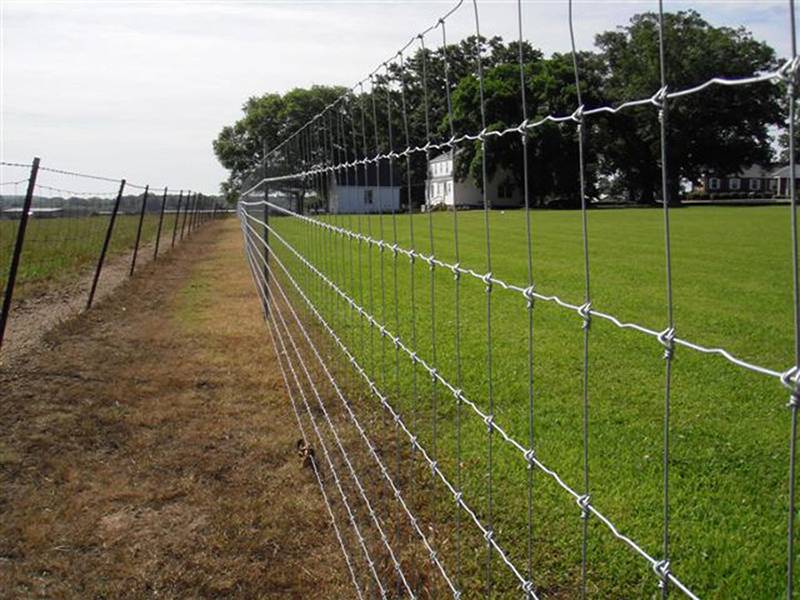
1. Start with the Posts. Seriously.
Here’s something nobody told me: the wire is only as good as what it’s attached to.
I made the classic rookie mistake. I spent decent money on the wire but cheaped out on the posts. I bought whatever was on sale—some light-duty timber that looked fine in the yard. Two years later, half of them were leaning like the Tower of Pisa.
What I learned:
- Corner posts are everything. If your corner posts move, your entire fence moves. I now use 150–175mm treated timber set in concrete. Overkill? Maybe. But my corners haven’t budged an inch in five years.
- Pressure treatment matters. If it says “dip treated,” walk away. You want vacuum pressure treated (Class 4). It costs more upfront but lasts 20 years instead of 7.
- Steel posts have their place. On my wet, heavy clay soil, steel Y-posts have been a revelation. They don’t rot, they don’t heave in frost, and they’re actually cheaper in the long run.
My advice: Budget for good posts first. Then see what’s left for wire. You can upgrade wire later if needed. You cannot easily replace a leaning corner post once the fence is up.
2. Not All Wire Is Created Equal (Even If It Looks the Same)
Standing in the agricultural merchant, all the rolls of wire look pretty similar. Silver, shiny, rolled up. But here’s where I got caught out.
I bought what I thought was a good deal. It was a 200-metre roll for about €180. Seemed fine. Within three years, it was rusting at every staple point. The knots were loosening. A section near the gate had snapped entirely.
What I learned:
- Check the zinc coating. If you live anywhere with decent rainfall—and let’s face it, most of us in Europe do—you need a proper galvanised coating. Look for 450 g/m² or ask for “Class B” or “heavy galvanised.” The cheap stuff has half that. You’ll pay for it later.
- Fixed knot vs. welded. I learned this the expensive way. Welded mesh is fine for garden trellis. For livestock? You want fixed knot (hinged knot) . When a cow leans into it (and they will), the knots flex instead of breaking. My welded fence failed at the weld points. My fixed knot fence is still standing.
- Look for EN 10223 on the label. If it doesn’t have that, it’s probably imported from somewhere without European quality standards. It might look the same, but the steel tensile strength is often lower.
My advice: Ask your merchant for the Declaration of Performance (DoP). If they can’t provide it, buy somewhere else. I’m not being fussy—I’ve learned that paperwork reflects accountability.
3. Think About Your Animals—Really Think
When I first fenced, I thought “cattle fence is cattle fence.” Wrong.
I run a mixed farm: a few cattle, some sheep, and a couple of horses that belong to my daughter. What works for one is dangerous for another.
Here’s what I’ve learned for each:
| Animal | What I Wish I’d Known |
|---|---|
| Cattle | They push. Constantly. You need a fence that can absorb pressure. 8–10 line wires with good tensioning. And leave the bottom wire high enough (20–25cm off the ground) so they can graze under it—otherwise they’ll push it down to reach the grass on the other side. |
| Sheep | They don’t push; they squeeze. If the mesh is bigger than about 10cm, a determined ewe will get her head through, and then she’s stuck. I now use sheep netting with small squares at the bottom and a plain wire on top. |
| Horses | This one scared me. I’d read horror stories about horses getting hooves caught in wide mesh. I ended up installing a non-climb fence with 5cm x 10cm mesh along the paddock. It cost more, but I sleep better. And I added a white plastic rail on top so they can actually see it—horses don’t judge distance well. |
My advice: Walk your land with your animals in mind. Where do they gather? Where might they push? What’s the escape route if they do get out? (Ask me how I know about escape routes.)
4. The Ground Matters More Than You Think
I’m on heavy clay in the west of Ireland. My neighbour is on sandy soil twenty miles away. We bought the same fence. His lasted ten years longer than mine. Why? Ground conditions.
What I’ve learned about my own land:
- Wet ground: Posts rot faster. Steel posts or concrete are better investments than timber in perpetually wet paddocks.
- Frost: If your ground freezes in winter, shallow posts will heave. I now set my concrete footings at least 80cm deep. It’s a pain to dig, but I’m not re-setting posts every spring.
- Slopes: My land is rolling. I used to try to follow the contour, but that left gaps underneath. Now I run the fence straight and use a technique called “racking” —the fence actually flexes to follow the slope. You need hinged knot wire for this. Welded wire won’t do it.
My advice: Before you buy a single post, spend a morning walking your boundary with a notepad. Mark wet areas, slopes, gate locations, and where neighbours’ animals might be on the other side. That map will tell you more than any product brochure.
5. Tensioning: The Skill I Had to Learn
The first fence I installed was… wavy. I didn’t tension it properly. I thought “tight enough” meant “I can’t push it down with my hand.”
I was wrong.
What I learned the hard way:
- Over-tensioning is as bad as under-tensioning. I cranked one section so tight that when the temperature dropped in winter, the wire snapped at a knot. Now I use a proper fence strainer with a gauge, and I leave a little slack for thermal movement.
- Strainer sections matter. I used to run my fence 200 metres between corners. Bad idea. Any sag in the middle becomes impossible to fix. Now I keep my straight runs to 80–100 metres between strainer posts.
- Stapling technique. I hammered staples flush against the timber. Turns out that’s wrong. You want them just tight enough to hold the wire but loose enough that the wire can slide slightly. When I learned to leave a gap, my wire stopped snapping at the staple points.
My advice: If you’re doing it yourself, watch someone who knows what they’re doing first. I wasted a weekend and a roll of wire trying to figure it out on my own. A neighbour showed me in twenty minutes what I couldn’t learn from YouTube.
6. The Hidden Costs I Didn’t Budget For
Here’s a confession: my original fence budget was for materials only. I forgot to account for:
- Concrete for corner posts (more than you think)
- Gate hardware (hinges, latches, gate posts—easily €200–400 per gate)
- Tensioning tools (a good strainer and wire grippers)
- Staples (you’ll go through more than you expect)
- Delivery (fencing rolls are heavy and long—delivery isn’t always free)
My advice: Add 20–25% to your material budget for the “little things.” It’s boring advice, but it’s honest.
7. Check the Rules Before You Start
I nearly made a costly mistake. I planned to replace a boundary fence along a lane that’s a public right of way. I was about to start digging when a neighbour mentioned I might need permission.
Turns out, in my area (and in many parts of the UK and Ireland), you can’t put up a fence over 1 metre high alongside a public right of way without planning permission. I would have had to take the whole thing down and start again.
What I check now:
- Is the boundary along a road or lane? Visibility clearance requirements.
- Is my land in a conservation area or Area of Outstanding Natural Beauty?
- Are there any existing rights of way across the land?
- If I’m replacing a fence, am I legally responsible for the boundary? (In some cases, it’s shared.)
My advice: A five-minute call to your local council or agricultural office can save you thousands. I know because I nearly learned that lesson the expensive way.
8. When to DIY and When to Hire a Pro
I’m a DIY person. I like doing things myself. But after my first fence, I did the maths.
| Task | DIY | Hire |
|---|---|---|
| Straight runs on flat ground | Yes, with patience | Optional |
| Corners and gate posts | Maybe, if you’ve done it before | Honestly, yes |
| Hilly or wet terrain | No. Just no. | Absolutely |
| Long runs (over 500m) | Consider your back | Worth the cost |
| Tensioning | If you have the right tools | Many pros do this faster and better |
What I do now: I do the intermediate posts myself. I let the contractor handle corners, gates, and tensioning. It costs more upfront, but my fences don’t fail, and I’m not out there repairing every spring.
9. Maintenance Is Not Optional
Here’s the honest truth: even a perfect fence needs attention. I used to think “it’s up, it’s done.” Then I’d ignore it for two years and wonder why it looked terrible.
My annual routine (takes a weekend):
- Walk the whole fence line in early spring. Look for loose wires, leaning posts, rust spots.
- Cut back vegetation. Brambles and nettles hold moisture against the wire. A strimmer once a year adds years to the life of the fence.
- Check tension. I give every run a push. If it feels slack, I re-tension.
- Inspect gates. Gates sag, hinges wear. A gate that doesn’t close properly is an invitation for animals to push through.
My advice: Put it in your calendar. “Fence walk” is now a yearly event in our household. It’s a morning of work that saves me days of repair later.
10. Buy Once, Cry Once
This is the advice I ignored, and it cost me.
My first fence was cheap. It lasted three years. The replacement fence cost twice as much. Over the five-year period, I spent more than if I’d just bought the good stuff the first time.
What “good stuff” means to me now:
- Wire: EN 10223, fixed knot, 450 g/m² zinc coating minimum
- Timber: Pressure treated Class 4, or steel where appropriate
- Corners: Oversized, concreted, properly braced
- Gates: Galvanised steel or heavy timber, not light farm gate specials
What I tell my neighbours now: Buy the fence you’ll have in ten years, not the one you can afford this month.
Final Thoughts
I’m not a fencing contractor. I’m not trying to sell you anything. I’m just a farmer who made a lot of mistakes so you don’t have to.
If you take one thing away from this, let it be this: walk your boundary, talk to your neighbours, and buy quality where it matters.
A good fence isn’t just about keeping your animals in. It’s about good relationships with neighbours. It’s about not waking up at 3am because you heard something in the yard. It’s about knowing, when you close the gate at the end of the day, that everything is where it should be.
That’s worth paying for.